
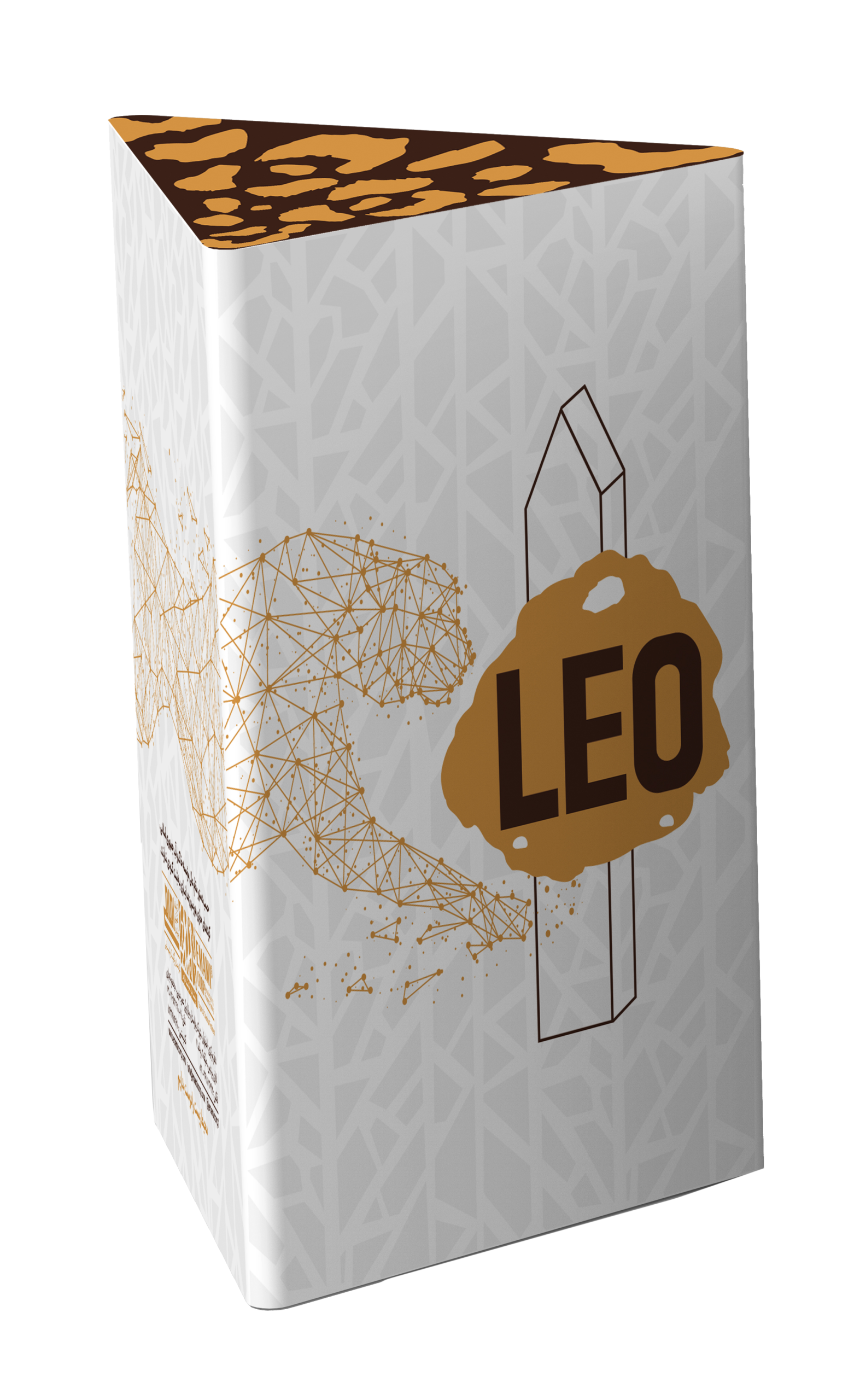
As agile as the Persian cheetah, Leo stimulates both vegetative and reproductive growth, promoting flowering, fruit sizing, and color development. It also helps plants recover from environmental stresses rapidly, with visible effects within one week. Apply Leo at just 3 g/ha to dramatically increase the number of flowers and blossoms.
A POWERFUL REGULATOR OF VEGETATIVE AND REPRODUCTIVE GROWTH AND AN ADVANCED STRESS RELIEVER
APPLY LEO AT JUST 3 GRAMS PER HECTARE AND DISCOVER LEINR TECHNOLOGY.
LEO incorporates LEINR technology (Layered Elements with INtelligent Release), an advanced fertilizer production technology developed to significantly enhance nutrient-release efficiency.
Through the LEINR system, the specific surface area of the fertilizer can be increased through compaction, enabling the release mechanism to be enhanced by up to 400-fold. The intelligent release mechanism of LEO allows plant growth regulators to be incorporated together without antagonistic interactions. To protect this formulation, inhibitors and stabilizers are used, ensuring that the compound remains highly stable when exposed to ultraviolet radiation, atmospheric oxygen, and other gases.
LEINR technology provides a safe, economical, and efficient platform for fertilizer formulations, enabling multiple nutrients and bioactive compounds to be maintained together in a stable formulation. Reducing the quantity of fertilizer used in agriculture can contribute to a healthier environment, reduced soil salinity, improved groundwater quality, and more sustainable agricultural production.
LEO Intelligent Release Mechanism
Upon dissolving in water, LEO releases its stored ingredients through two mechanisms:
The coating materials used to create these release mechanisms include starch, attapulgite, and alginate. These materials create a high nutrient concentration gradient and facilitate the stabilization and encapsulation of nutrients.
Alginate expands upon absorbing water and forms an egg-crate-like structure, within which the nutrient is retained and precisely released.
The coating technology is one of the most important technologies in the chemical fertilizer industry and is currently available through Emami Corp.
Special Characteristics:
A hormonal formulation containing growth regulators for both vegetative and reproductive development
One 3-gram LEO unit is sufficient for 400 liters of water and can be applied by foliar spraying over up to one hectare of field, greenhouse, or orchard, depending on plant canopy size.
Following application, LEO significantly improves vegetative growth, reproductive development, flowering, fruit size, and coloration. Within approximately one week, it also helps alleviate the effects of environmental stresses such as heat, cold, salinity, and other abiotic stresses.
LEO can significantly increase the number of flower buds and blossoms.
Recommended Application Schedule
| Crop | Application Timing | Application Method |
| Fruit trees (apple, pear, etc.) | After flowering, during fruit sizing | Foliar |
| Stone fruits (peach, apricot, nectarine, etc.) | During the fruit cell-division stage | Foliar |
| Strawberry | After the first fruit set | Foliar |
| Grapevine | Before flowering, at berry emergence and cluster flowering | Foliar |
| Kiwi | After fruit set, at hazelnut-sized fruit stage | Foliar |
| Citrus | At the beginning of fruit set | Foliar |
| Vegetable crops | From mid-fruiting onward | Foliar |
| Carrot, onion, lettuce, turnip, etc. | 2–3 weeks after emergence; during root development and at full root formation | Foliar |
| Broccoli, cauliflower, cabbage, etc. | At the 4–6 leaf stage and 2 weeks after the first application | Foliar |
| Asparagus | 2 weeks after the final harvest and during mid-maturity | Foliar |
| Potato | One month after emergence; at the beginning and middle of tuber formation | Foliar |
| Cucumber, tomato, bell pepper, etc. | After every 5 harvests | Foliar |
| Cut flowers | After every 6 harvests | Foliar |
LEO is compatible with plant protection products (pesticides); however, its effect on the plant depends on the crop’s phenology and developmental stage.
Therefore, do not apply or tank-mix LEO without consulting a qualified agronomist or technical expert.